

Advanced Mobility Ecosystem
Traditional industry strategically repositioned within the emerging mobility ecosystem — beginning with bicycles.
The Thesis
As capital accelerates toward AI and high tech, we focus on an equally strategic frontier within the mobility ecosystem: traditional industries of global relevance.
Taiwan anchors one of the world’s most sophisticated high-end cycling industry — and a generational shift is underway.
A central question emerges:
How can manufacturing strength translate into strategic and capital leverage?
The answer does not emerge automatically.
It requires new innovation models, deliberate collaboration, and capital structures aligned with industry realities.
At the same time, the opportunity is global.
For many startups, corporations, and investors, Taiwan’s supply chain remains difficult to navigate. Capabilities are world-class — yet pathways are opaque. Relationships take years to build. Strategic entry points are unclear.
The result is not a gap of competence.
It is a gap of alignment.
Our first initiative under this thesis — Bike Venture — was launched in 2024 to create that alignment.
Traditional industry is no longer defined solely by production.
It is defined by its ability to engage strategically in capital formation, technological evolution, and long-term value creation.
Reconfiguring Where Industry Dialogue Takes Place
Structural change requires structural platforms.

Strategic Implementation Across the Global Cycling & Mobility Ecosystem
Across Taipei Cycle, EUROBIKE, and Taichung Bike Week, we convene manufacturing leaders, next-generation executives, technologists, corporate venture arms, and global investors to reshape where strategic dialogue happens at established industry gatherings.
Taipei Cycle
Building an Innovation Engine Inside a 35-Year Trade Institution
For over three decades, Taipei Cycle has been a defining fixture on the global bicycle industry calendar.
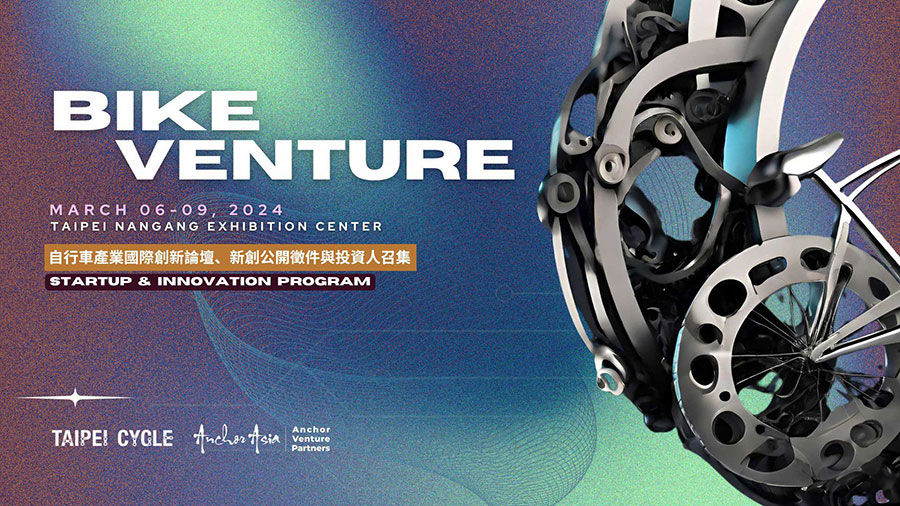
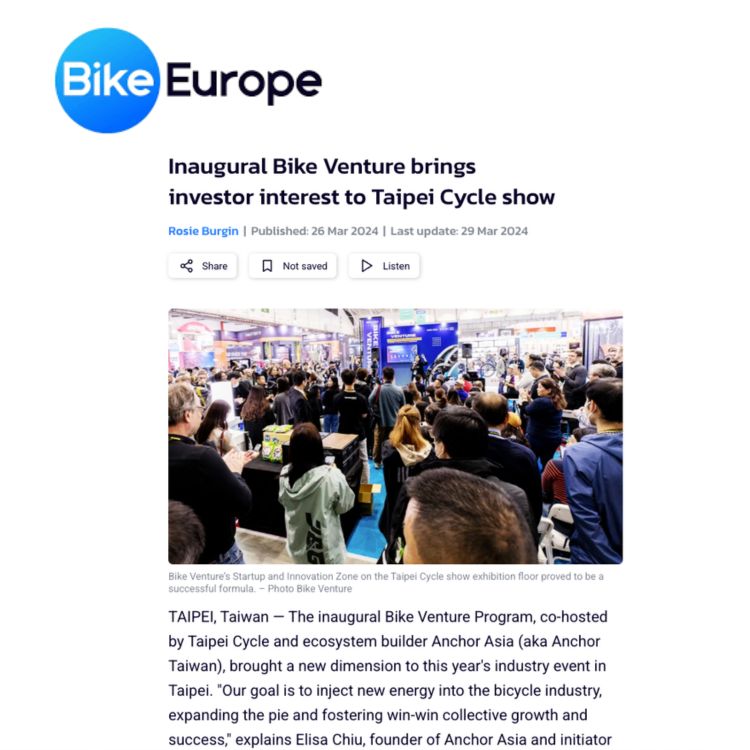
In 2024 — its 35th anniversary — Anchor launched a fully integrated innovation program at Taipei Cycle.
Bike Venture connected startups, investors, and cross-industry leaders with the manufacturing ecosystem at scale — expanding a platform historically centered on sourcing into one that engages capital and innovation.
Highlights
For the first time in its history, Taipei Cycle entered a new chapter — one where innovation and capital became embedded within the industry’s core infrastructure.
What emerged was not a side program, but a structural layer:
A public–private collaboration with institutional backing — with Anchor contributing strategic leadership and financial commitment to bring the framework to life.
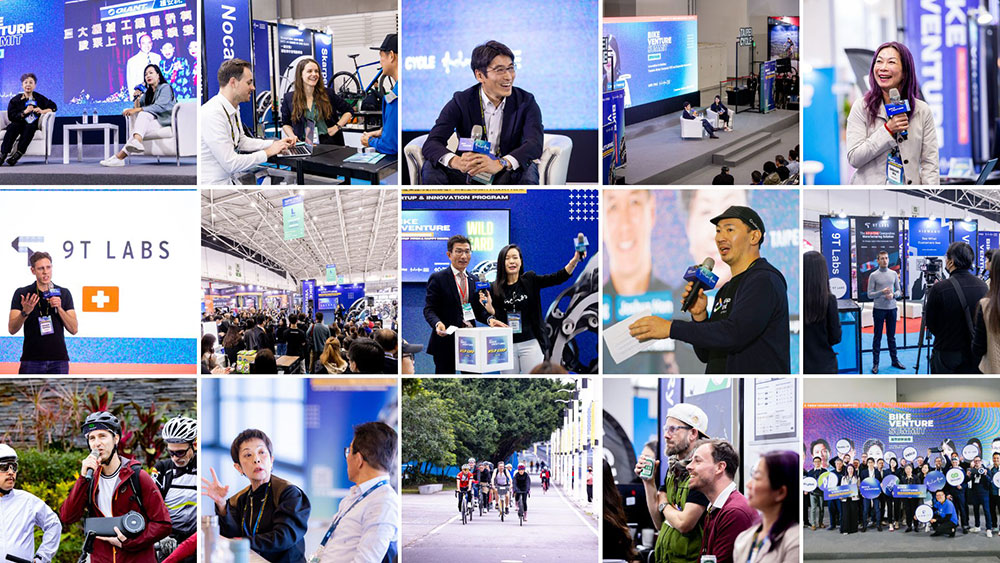
A global open call attracting submissions from 14 countries, selecting 10 Startup Honorees across electrification, digital transformation, ESG, and new mobility models — expanding the industry’s lens beyond hardware into systems thinking.
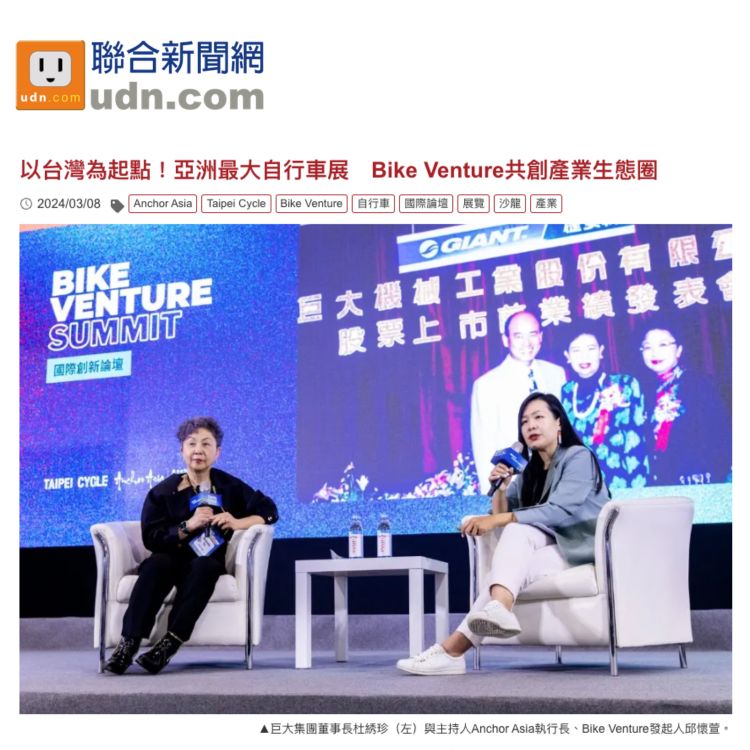
A curated convening of senior industry and capital leadership — including the Chairperson of Giant Group, the Chairman of the Taiwan Bicycle Association, the CEO of Yamaha Motor Ventures, and global venture partners — placing corporate innovation and venture capital in direct dialogue with manufacturing.
Strategic Impact
Bike Venture demonstrated how a traditional trade show can operate as a strategic node — where manufacturing, technology, startups, and capital intersect.
The program introduced a structural blueprint that continues to unfold across platforms and geographies.
EUROBIKE
Capital and Innovation on the Global Stage
EUROBIKE is the industry’s most influential global platform.
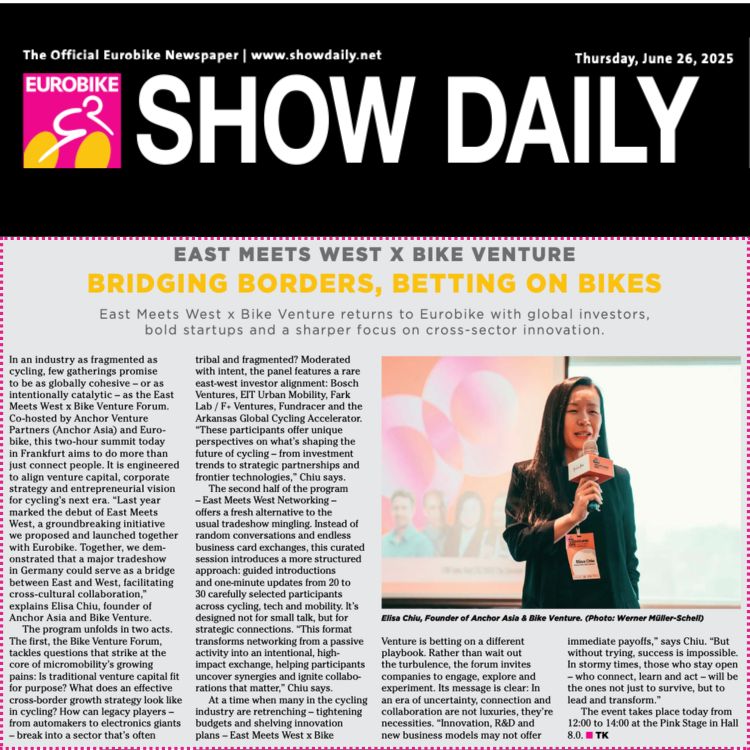
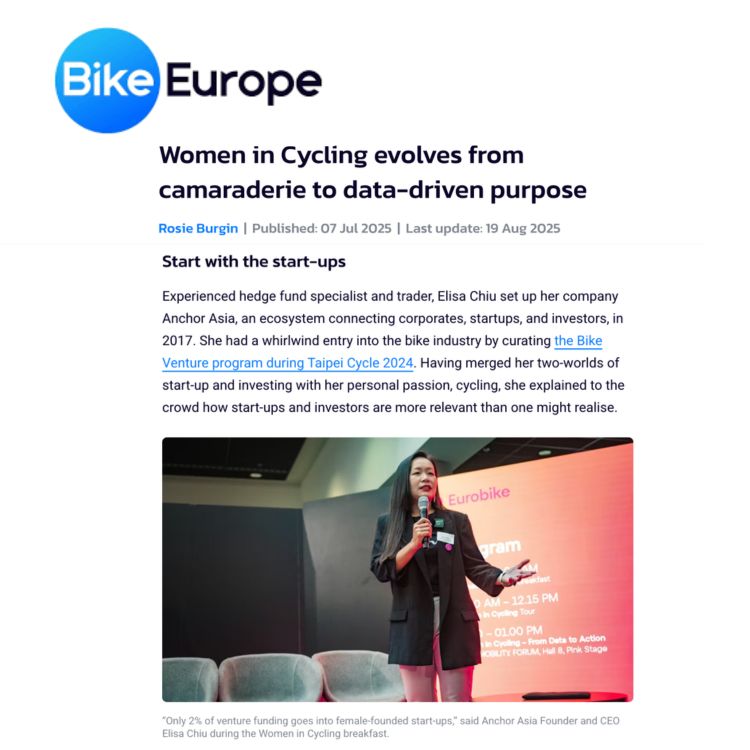
Shortly after launching Bike Venture in Taipei, Anchor expanded the initiative globally, initiating collaboration with EUROBIKE and introducing East Meets West in 2024.
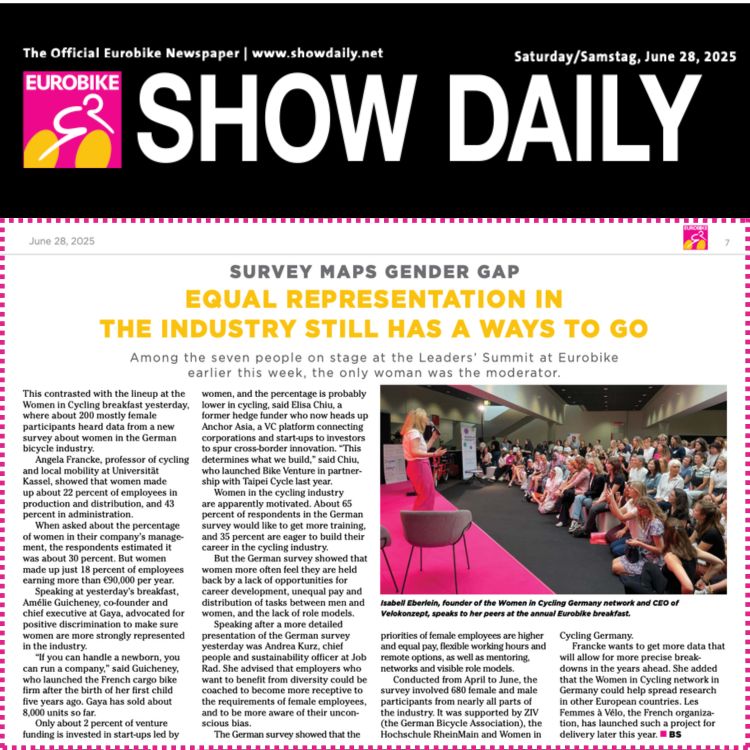
What began as a curated cross-border networking forum evolved into a recurring platform — elevated to the main stage in 2025 and further expanded in 2026 into one of the show’s most sought-after convenings.

Highlights
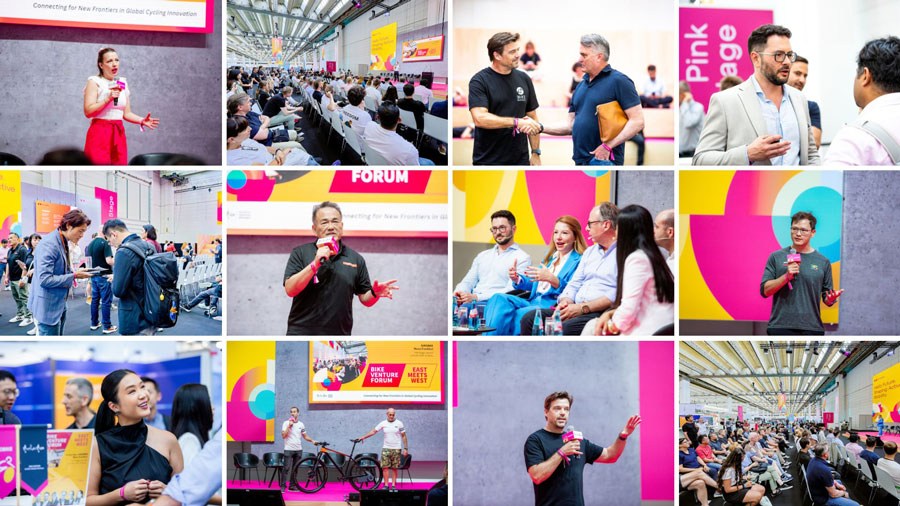
At EUROBIKE, we structured a deliberate arena for capital and strategic dialogue — convening family offices, corporate venture arms such as BOSCH Ventures, mobility-focused VCs, EU-backed investors, accelerators, founders, and senior executives within a shared global context.
The format was intentionally designed for alignment, mobilizing next-generation leaders and cross-border partners through curated exchange and intentional proximity.
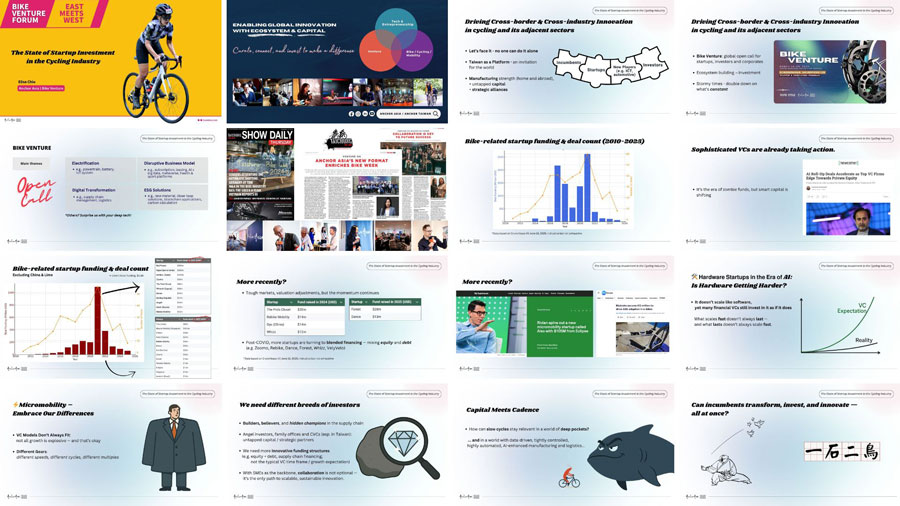
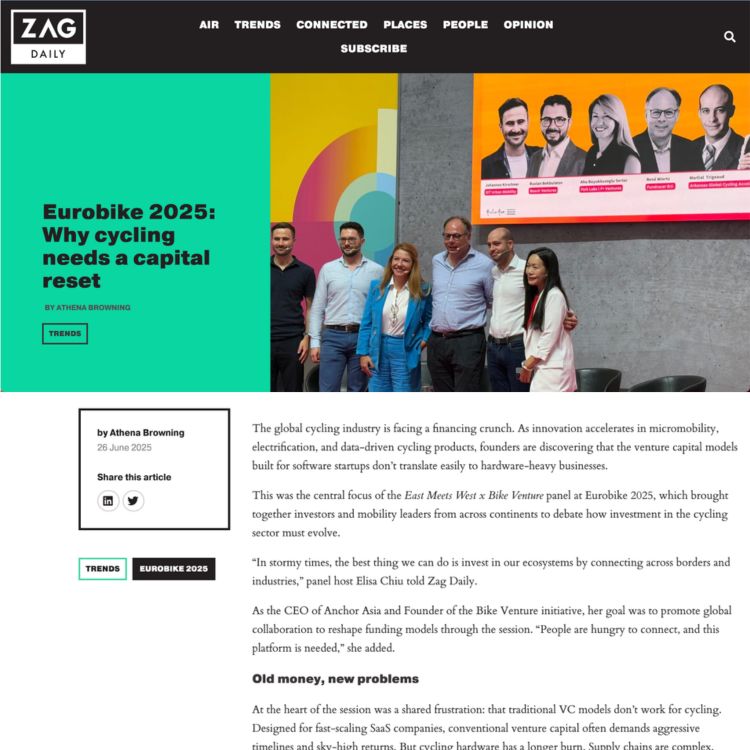
Through thesis-driven programming, we advanced critical conversations on capital markets and industry positioning — including the 2025 main stage dialogues, “The State of Startup Investment in the Cycling Industry” and “Why Cycling Needs a Capital Reset.”
Strategic Impact
Beyond booth presence, Anchor deepens Asian participation in global industry strategy — contributing sustained dialogue and reinforcing long-term collaboration with EUROBIKE amid market volatility.
Taichung Bike Week
From OEM Density to Executive Strategy
Unlike Taipei Cycle or EUROBIKE, Taichung Bike Week is decentralized and deeply embedded in one of the world’s most concentrated OEM clusters.
Behind closed doors, serious conversations unfold on specifications, orders, pricing, and production realities.
Anchor introduces complementary layers without altering this foundation — leveraging the unique density of OEM leadership to create room for executive reflection alongside operational negotiation.
What Anchor Introduced
1. Global Insight Integration: Venture On Exectuvie Forum
2. Intentional Space for Strategic Reflection: Ascent by Anchor

Venture On Executive Forum
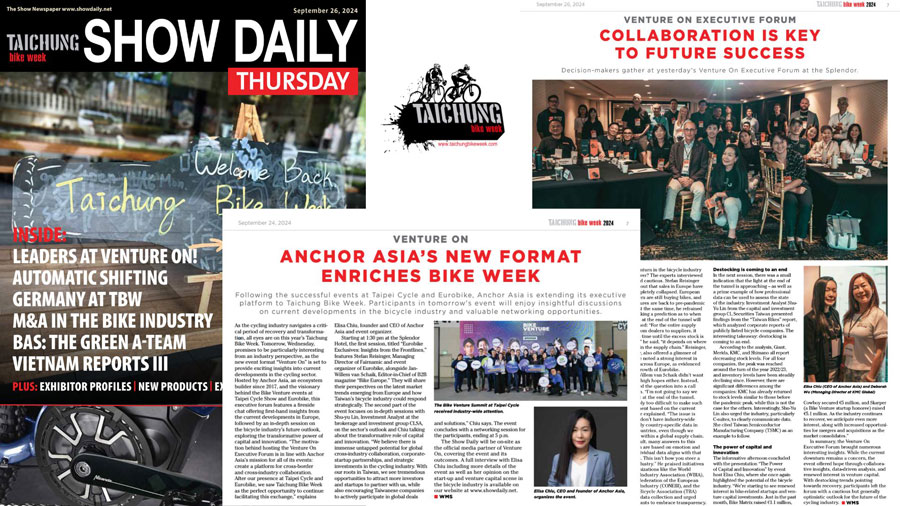
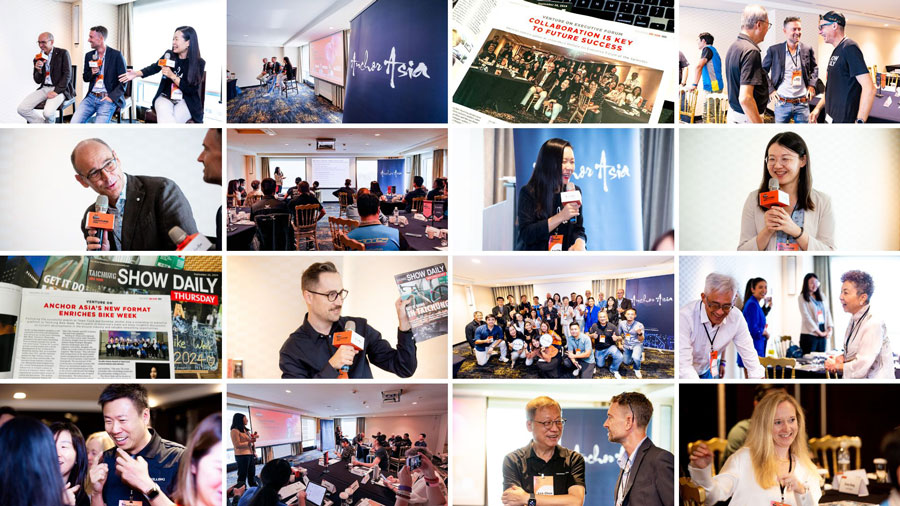
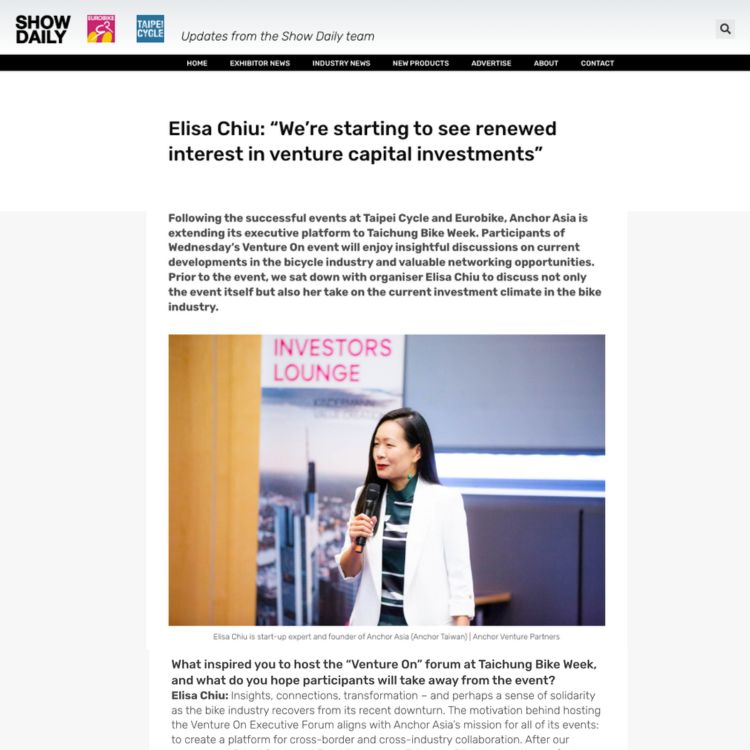
Designed for C-suite and next-generation decision-makers, Venture On positioned Taichung not only as an OEM hub, but as a space for forward-looking strategic discourse.
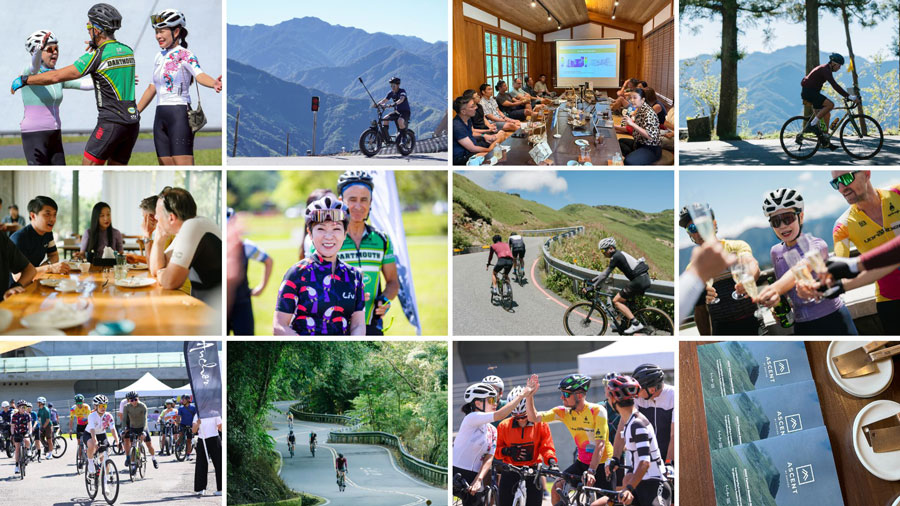
Ascent by Anchor
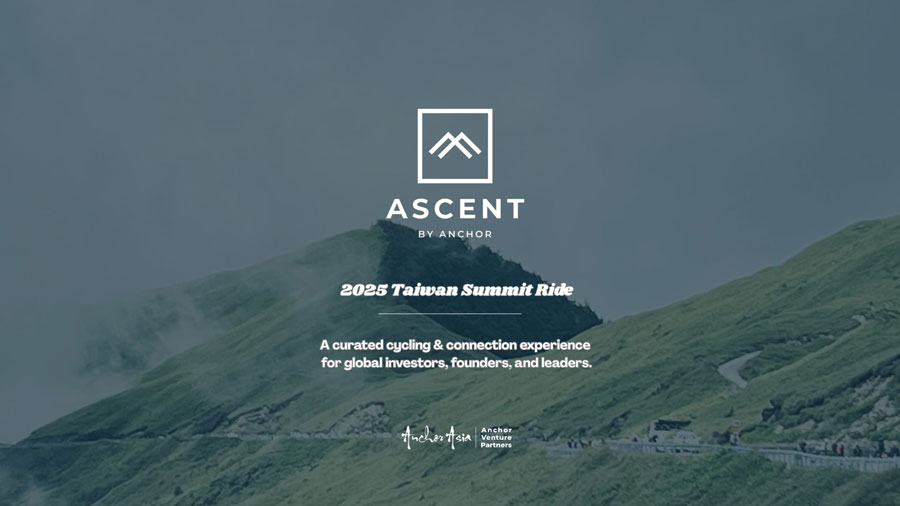
Not just a ride. A shared and co-created ascent.
A curated cycling and connection experience bringing investors, founders, and next-generation leaders together through shared physical challenge and structured dialogue beyond meeting rooms — building trust and long-term cross-border alignment.
Strategic Impact
Operational negotiations continued at full intensity. Alongside them, long-term capital thinking, generational leadership, and global positioning entered the conversation.
Mobility & Cycling Innovation: Long-Term Vision
We follow a phased strategy:
Phase 1 – Introduce Dialogue
Embed technology and capital into traditional industry arenas.
Phase 2 – Build Cross-Border Connectivity
Create structured bridges between Taiwan and global ecosystems.
Phase 3 – Institutionalize Capital & Collaboration
Design sustainable frameworks for investment, governance, and long-term value creation.
The cycling industry serves as the proving ground for a broader mobility and micromobility transformation across traditional sectors.
This is a structural commitment to strengthen industry transformation, expand capital participation, and ensure global relevance for decades to come.
Selected Coverage & Insights
.png)


